NRI Investment Guide for Yelahanka Apartments, Bangalore 2026: FEMA, Tax and Best Projects
FEMA and tax information based on regulations as of July 2026. Consult a CA or legal advisor before making a purchase decision.

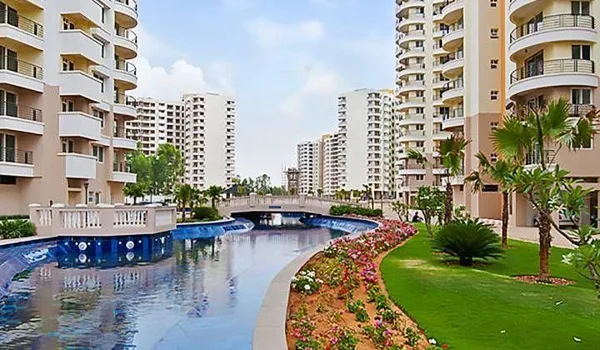
Yelahanka in North Bangalore has emerged as one of the strongest NRI investment destinations in South India: KIA airport proximity (8 to 25 km from most projects), Embassy Group's integrated township launch, and a price corridor of ₹7,000 to ₹12,000 per sq.ft. that remains significantly below the ₹15,000 to ₹25,000 range in central or south Bangalore localities. For Yelahanka property buyers based abroad, the investment case is straightforward. The regulatory path is also well-defined under FEMA 1999. This guide covers the complete NRI purchase process, tax implications, and the five best projects in Yelahanka for NRI buyers as of July 2026.
FEMA Eligibility: Who Can Buy Yelahanka Apartments as an NRI?
Under the Foreign Exchange Management Act (FEMA) 1999 and RBI regulations, the following categories can purchase residential property in India without prior RBI approval:
- NRI (Non-Resident Indian): Indian citizen residing outside India for employment, business, or any other purpose indicating an indefinite stay abroad.
- OCI (Overseas Citizen of India): Foreign nationals of Indian origin holding an OCI card issued by the Government of India.
- PIO (Person of Indian Origin): Foreign nationals who held Indian passports or whose parents or grandparents were Indian citizens (largely subsumed into OCI since 2015).
Prohibited purchases: NRIs, OCIs, and PIOs cannot purchase agricultural land, plantation property, or farmhouse property in India without prior RBI approval (which is rarely granted). All Yelahanka gated community apartments are residential property and are fully eligible. No limit exists on the number of residential properties an NRI can hold in India.
Payment Channels: How NRIs Must Pay for Yelahanka Apartments
FEMA requires that NRI property purchases be funded through specific channels. Cash payments and funds from foreign accounts directly credited to a developer's Indian account (without routing through an Indian banking channel) are not permitted. Permitted channels:
| Channel | Account Type | Repatriation on Resale | Suitability |
|---|---|---|---|
| NRE Account | Non-Resident External (INR) | Fully repatriable (principal + gain) | Best: foreign income routed to India; fully repatriable |
| FCNR(B) Account | Foreign Currency Non-Resident Bank | Fully repatriable | Good for FD-backed purchase; currency hedged |
| NRO Account | Non-Resident Ordinary (INR) | Up to USD 1 million per year with Form 15CA/CB | For Indian-source income (rental, salary earned in India) |
| Inward Remittance | Direct foreign currency wire to Indian bank | Fully repatriable if documented | For one-time large remittances |
Repatriation rules as of July 2026. Subject to RBI regulations. Verify with your bank before transferring funds.
Key rule: Maintain a clear paper trail of all fund transfers for each installment payment to the developer. Banks issue a FIRC (Foreign Inward Remittance Certificate) or account debit confirmation for each transfer: retain these documents as they are required for repatriation of sale proceeds later.
NRI Home Loans for Yelahanka Apartments
Most major Indian banks and Housing Finance Companies offer NRI home loans for RERA-registered projects. Key parameters as of July 2026:
- LTV ratio: Up to 80% of the property value or cost, whichever is lower. The remaining 20% (plus stamp duty and registration charges) must be funded from the NRI's own NRE/NRO/FCNR accounts.
- Eligible lenders: SBI, HDFC, ICICI Bank, Axis Bank, Bank of Baroda, and most major private and public sector banks have NRI home loan products. Interest rates for NRI loans are typically the same as resident Indian loans (linked to EBLR or MCLR).
- EMI repayment: EMI must be repaid by debit from the NRI's NRE or NRO account held with the lending bank. Pre-EMI interest during construction can similarly be debited from these accounts.
- Income documentation: Salary slips, employment contract, ITR (if filed), and bank statements for the past 6 to 12 months in the country of employment. Requirements vary by bank and country of residence. Applicants from GCC countries (UAE, Saudi, Qatar, Kuwait) typically face the most streamlined process at Indian banks with NRI desks.
- Loan pre-approval: NRI buyers should obtain in-principle loan approval from their bank before signing the sale agreement, to confirm loan eligibility against the specific project and developer.
Power of Attorney for NRI Property Purchase
NRIs who cannot travel to India to execute property registration can appoint a Power of Attorney (POA) holder: a resident Indian (family member or trusted person) who is authorised to sign documents, pay instalments, and complete registration on the NRI's behalf. The POA process:
- Draft the POA document covering the specific property, developer, and authorised acts (signing sale agreement, executing registration, taking possession).
- Notarise the POA before an Indian Consulate or Embassy in the country of residence (not a local notary public).
- If the country is a signatory to the Hague Convention, get the POA apostilled. If not, additional attestation from the Ministry of External Affairs and the state government is required in India.
- Send the original notarised/apostilled POA to India. It must be adjudicated (stamped) at a local sub-registrar office before use.
- The POA holder can then execute all property documents, attend registration, and accept possession on behalf of the NRI.
Important: A POA used for property registration in India must be a specific and limited POA (not a general POA), clearly naming the property and authorised transactions. Consult a property lawyer in Bangalore to draft the POA correctly to avoid registration rejection.
RERA Protection for NRI Buyers
The Real Estate (Regulation and Development) Act 2016 (RERA) provides the same statutory protections to NRI buyers as to resident Indian buyers. Key RERA rights relevant to NRI investors:
- Mandatory project registration: Developers must register all projects with Karnataka RERA (K-RERA) before accepting bookings. Verify the RERA number on the K-RERA portal (rera.karnataka.gov.in) before booking any Yelahanka project.
- Construction-stage escrow: Developers must maintain 70% of collected amounts in a dedicated escrow account to be used only for construction of that specific project. This protects NRI buyers from fund diversion to other projects.
- Penalty for delay: If possession is delayed beyond the RERA-registered date, the developer must pay the buyer interest at the SBI MCLR rate plus 2% per annum on the amount paid. NRI buyers can claim this interest via K-RERA complaint even from abroad.
- Defect liability: Developer is liable for structural defects or quality defects reported within 5 years of possession. NRI buyers can file complaints through the K-RERA online portal without travelling to India.
Tax Implications for NRI Apartment Buyers in Yelahanka
Stamp duty and registration: NRI buyers pay the same stamp duty (5 to 6% in Karnataka) and registration charge (1%) as resident Indian buyers. No additional tax applies at purchase stage for NRIs.
Rental income tax: Rental income earned by an NRI from an Indian residential property is taxable in India at a flat rate of 30% (plus applicable surcharge and cess) under Section 195 of the Income Tax Act. The tenant must deduct TDS before paying rent to an NRI landlord and deposit the TDS with the Government. The NRI files an Indian income tax return annually to claim credit for TDS deducted and to report rental income. Double Taxation Avoidance Agreements (DTAA) between India and the NRI's country of residence may reduce the effective tax rate; consult a CA for DTAA applicability.
Capital gains tax on resale: When an NRI sells an Indian property:
- Long-term capital gains (property held for 2 or more years): 12.5% without indexation benefit (post-Finance Act 2024 amendment). The buyer must deduct TDS at 12.5% plus applicable surcharge and cess before paying the NRI seller.
- Short-term capital gains (held less than 2 years): taxed at the applicable income tax slab rate (up to 30% plus surcharge for NRIs with high income).
- The NRI seller must file an Indian income tax return for the year of sale to claim credit for TDS deducted and any applicable exemptions (Section 54 exemption for reinvestment in another Indian residential property).
Consult a CA: NRI property taxation involves multiple variables (holding period, DTAA, exemptions, surcharge slabs). The figures above are indicative as of July 2026. Always verify current rates with a Chartered Accountant before finalising your investment decision.
5 Best Yelahanka Projects for NRI Investment in 2026
Ranked by overall NRI suitability (brand assurance, resale liquidity, rental demand, RERA compliance, and pre-launch price opportunity):
1. Embassy Knowledge Park: Best Pre-Launch NRI Investment

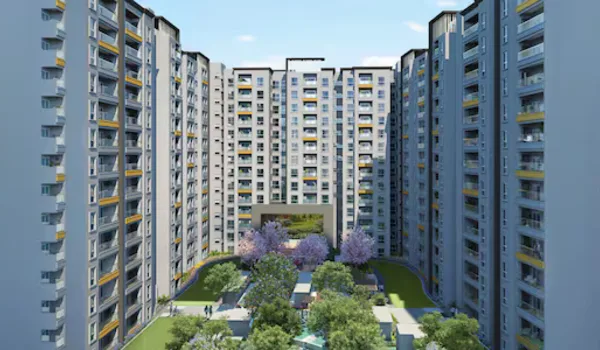
Embassy Knowledge Park at Tharahunise, Yelahanka is the standout NRI pre-launch opportunity in Bangalore in 2026. The 200-acre integrated township by Embassy Group launches in August 2026 with 2/3/4 BHK apartments and G+2 luxury villas: the 4,000-tree green zone, Grand Clubhouse, and Stonehill International School (IB) adjacency position it as a premium township address. The on-site IT tech park, when tenanted, adds a walk-to-work dimension that no other Yelahanka project offers. Pre-launch pricing on request. Possession: August 2031.
Why NRIs prefer Embassy Knowledge Park: Embassy Group's institutional credibility (Embassy REIT is listed on NSE/BSE: EMBASSY), land ownership scale (200 acres: not a 4-acre plot), and proximity to KIA airport (14 km: 20 minutes via NH-44) make this the most compelling pre-launch investment for NRIs returning to Bangalore or investing from abroad. The integrated township format with on-site tech park is a strong rental argument for future tech-park-employee tenants. Pre-launch stage provides the maximum price advantage before RERA registration triggers price increases.
NRI action step: Contact our team for NRI-specific pre-launch pricing, floor plan details, and POA documentation support.
2. Godrej Beacon: Strongest NRI Resale Liquidity

Godrej Beacon at Yelahanka New Town (2/3/4 BHK from est. ₹1.5 Cr, RERA registered, 2029 possession) is the top choice for NRI buyers who prioritise resale liquidity. Godrej Properties (BSE: 533150) is a pan-India listed developer: Godrej-branded apartments in any Indian city are recognised by NRI buyers across all geographies (US, UK, UAE, Singapore, Canada). This brand recognition translates to faster resale timelines and a smaller buyer discount versus comparable un-branded developers when an NRI needs to exit the investment. For NRIs who are uncertain about their return to India timeline, Godrej brand liquidity is the single strongest argument. The 2029 possession date is also the earliest among all mid-to-luxury options in Yelahanka, reducing the time to rental yield.
3. Brigade Eternia: Premium NRI Lifestyle Investment

Brigade Eternia at Chokkanahalli (3/4 BHK from ₹2 Cr+, Brigade Group, 2029 possession) is the top NRI lifestyle investment in Yelahanka: a luxury township with full amenities targeting CXO-grade residents and tenants. Brigade Group (NSE: BRIGADE) is a 40-year South India developer with SEBI-listed status: strong brand assurance for NRI buyers evaluating long-distance investment. For NRIs who want a large-format 3/4 BHK luxury apartment in Yelahanka for eventual return or for CXO rental income, Brigade Eternia is the best-matched product. The 2029 possession (earlier than most Yelahanka alternatives) reduces the investment cycle length.
4. TVS Emerald Auralis: Best NRI Rental Yield in Yelahanka
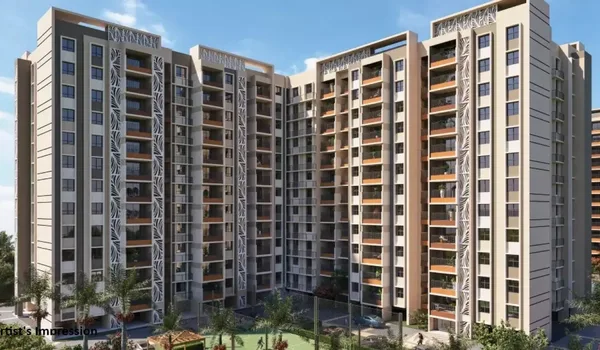
TVS Emerald Auralis (RERA: PRM/KA/RERA/1251/472/PR/110925/008087) at Thanisandra (2 BHK from ₹1.29 Cr, 3 BHK from ₹1.71 Cr, 2030 possession) provides the strongest rental yield potential among all Yelahanka projects for NRI investors. Its proximity to Manyata Tech Park (3 to 4 km), with over 100,000 IT employees as the tenant pool, means demand for 2 and 3 BHK units here is consistently high. A ₹1.29 Cr 2 BHK can generate ₹22,000 to ₹28,000 monthly rent (3.5 to 4% gross yield): the highest in the Yelahanka belt for a gated community. NRIs seeking pure income yield from Yelahanka should evaluate TVS Emerald Auralis first. TVS Emerald is the residential arm of the TVS Group, with a strong delivery track record and construction quality above the regional developer average.
5. Assetz Miru & Miyo: Best Premium Design for NRI End-Use

Assetz Miru & Miyo at Kogilu Cross (2/3/3.5 BHK from ₹1.58 Cr, RERA registered, 2030 possession) is the best premium design option for NRI buyers planning to return to Bangalore and occupy the apartment themselves. Assetz Property Group's design focus (larger balconies, better cross-ventilation, premium fittings above comparable price points) delivers a home that NRI buyers returning from the US, UK, or Singapore find matches their lifestyle expectations more closely than standard gated community specifications. The 3.5 BHK study is particularly suited to professionals who work from home part-time. The Kogilu Cross location on Bellary Road provides simultaneous access to Manyata Tech Park (8 km) and KIA airport (18 km) for frequent travellers.
NRI Rental Management in Yelahanka: Practical Guide
NRI landlords who live abroad need a reliable rental management arrangement before possession. Options for Yelahanka:
- Professional property management companies: Firms such as NoBroker, Square Yards, and local Yelahanka property managers offer end-to-end rental management (tenant finding, agreement drafting, rent collection, maintenance oversight, TDS filing). Fee: typically 1 month's rent per year plus monthly fees.
- Trusted family member: Many NRI landlords nominate a local family member as POA holder who also manages the rental. Practical and low-cost but depends on the family member's availability and willingness.
- Developer-managed rental programmes: Some developers offer post-possession rental management services. Confirm availability with your specific developer at booking stage.
- TDS compliance: Ensure your tenant deducts 30% TDS plus surcharge and deposits it before paying the net rent. Failure to deduct TDS makes the tenant liable for the shortfall. Verify TDS credit in your Form 26AS on the Income Tax portal annually.
Frequently Asked Questions: NRI Investment in Yelahanka Apartments
1. Can NRIs buy apartments in Yelahanka Bangalore?
Yes. Under FEMA 1999, NRIs and OCIs can purchase residential property in India without RBI approval. All RERA-registered Yelahanka apartments are eligible for NRI purchase. Agricultural land and plantation property are prohibited for NRI purchase without prior RBI approval.
2. Which account should NRIs use to pay for an apartment in Yelahanka?
NRIs must pay via NRE (Non-Resident External), NRO (Non-Resident Ordinary), or FCNR(B) accounts with an Indian bank, or through direct inward foreign currency remittance. Cash payments are not permitted under FEMA. Funds from NRE or FCNR accounts are fully repatriable on resale; NRO fund repatriation is capped at USD 1 million per year.
3. Can NRIs get a home loan for Yelahanka apartments?
Yes. Most major Indian banks (SBI, HDFC, ICICI, Axis) offer NRI home loans for RERA-registered projects up to 80% LTV. EMI repayment must be via NRE or NRO account. Interest rates are the same as resident Indian loans. Income documentation requirements vary by country of residence; obtain in-principle approval before signing the sale agreement.
4. Do NRIs need Power of Attorney to buy property in Yelahanka?
Not mandatory but strongly recommended. NRIs typically give a specific and limited POA to a trusted resident relative to sign sale agreements, execute registration, and accept possession. The POA must be notarized at the Indian Consulate or Embassy in the NRI's country and apostilled before use in India.
5. What tax does an NRI pay on rental income from a Yelahanka apartment?
Rental income earned by an NRI from Indian property is taxable in India at 30% plus surcharge and cess under Section 195. The tenant must deduct TDS at this rate before paying rent. The NRI claims TDS credit when filing an Indian income tax return. DTAA with the NRI's country of residence may reduce effective tax; consult a Chartered Accountant.
6. Which Yelahanka apartment is best for NRI buyers in 2026?
Embassy Knowledge Park (pre-launch pricing, Embassy Group brand, integrated township) for maximum price advantage; Godrej Beacon (listed pan-India developer) for strongest resale liquidity; Brigade Eternia for luxury 3/4 BHK format and 2029 possession; TVS Emerald Auralis for highest rental yield (3.5 to 4%) near Manyata Tech Park. Choose based on your priority: appreciation, resale, yield, or end-use.
7. Can NRIs repatriate money from the sale of a Yelahanka apartment?
Yes. If the purchase was funded via NRE or FCNR account or direct foreign currency remittance, the principal is fully repatriable. Repatriation from NRO account is limited to USD 1 million per financial year with Form 15CA/CB documentation. Capital gains (after TDS deduction) are repatriable within these limits. Retain all FIRC documents from original purchase for repatriation documentation.
NRI Investment in Yelahanka: Key Takeaways for 2026
Yelahanka offers NRI buyers a compelling combination: airport proximity (14 to 25 km from KIA), premium gated communities at ₹7,000 to ₹12,000 per sq.ft., strong institutional developers (Embassy Group, Brigade, Godrej, TVS, Assetz), and full FEMA and RERA compliance. The regulatory path is clear: fund via NRE or FCNR account, get in-principle bank approval, execute a notarised POA, and book with a K-RERA-registered developer.
For NRI-specific pre-launch pricing and documentation support at Embassy Knowledge Park, contact our team. We assist NRI buyers with POA documentation, bank liaison, and site visit coordination during India visits. Explore all Yelahanka property guides in the blog section below.
Embassy Knowledge Park Blog
More Yelahanka property guides from the Embassy Knowledge Park editorial desk.