Embassy Knowledge Park Master Plan
200-acre integrated township (multi-phase) · Phase 1 = 64 acres: 14-acre apartment cluster (4 towers, 855 units) · 50-acre G+2 villa enclave (217 units) · on-site IT tech park · 4,000-tree green programme at Tharahunise, Yelahanka (near NH-44 / Bellary Road), North Bengaluru. Zone breakdown below.
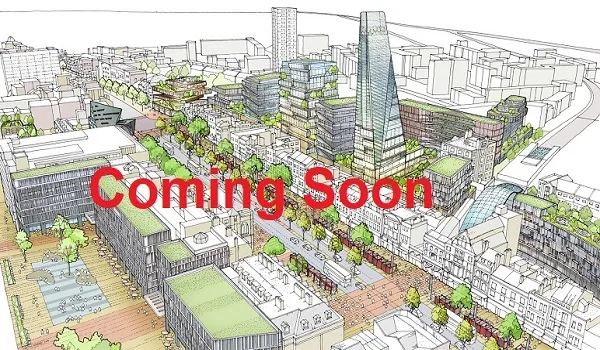
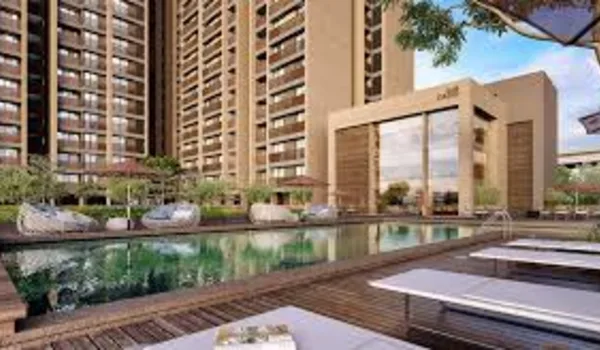
Embassy Knowledge Park Master Plan is spread across 200 acres in Tharahunise, North Bangalore. It is planned as a multi-phase mixed-use township with apartments, villas, an on- site IT tech park, a Grand Clubhouse, internal roads and large green zones. The current 64- acre Phase 1 includes a 14-acre apartment cluster with four high-rise towers and 855 apartments, along with a 50-acre villa enclave containing 217 G+2 villas. Phase 1 therefore has 1,072 homes in total.
The land allocation clearly shows how the township balances high-rise and low-rise living. The apartment cluster uses only 21.9% of the Phase 1 land but contains 79.8% of its homes. The villa enclave uses 78.1% of the land for 20.2% of the homes. This creates two very different residential densities within the same plan. The apartment parcel has about 61 homes per acre, while the villa parcel has only 4.34 homes per acre.
| Master Plan Element | Specification |
| Total Township Area | 200 acres |
| Phase 1 Area | 64 acres |
| Phase 1 Share of Township | 32% |
| Land Reserved for Later Phases | 136 acres (68%) |
| Apartment Cluster | 14 acres |
| Apartment Share of Phase 1 Land | 21.9% |
| Apartment Towers | 4 |
| Tower Structure | 2 Basements + Stilt + 17 Floors |
| Total Apartments | 855 |
| Apartment Density | ~61 homes per acre |
| Average Homes per Tower | ~214 apartments |
| Villa Enclave | 50 acres |
| Villa Share of Phase 1 Land | 78.1% |
| Total Villas | 217 |
| Villa Structure | G+2 |
| Villa Density | ~4.34 villas per acre |
| Total Phase 1 Homes | 1,072 |
| Overall Phase 1 Density | ~16.75 homes per acre |
| Apartment Sizes | 1,330 to 2,250 sq. ft. |
| Villa Sizes | 4,200 to 6,800 sq. ft. |
| Green Programme | ~4,000 trees |
| Open Space | ~75% across the township |
| Commercial Component | On-site IT tech park |
| Launch | August 2026 |
| Proposed Possession | August 2031 |
| RERA Status | Applied / Pending |
The 14-acre apartment and 50-acre villa figures are gross parcel areas. They include the buildings as well as the internal roads, setbacks, landscape, parking access and support spaces planned within each parcel. They should not be read as the building footprint alone.
How the 64-Acre Phase 1 Master Plan Is Divided
Phase 1 — the current launch — spans 64 acres of the wider 200-acre master plan.
The full Phase 1 land is divided into two residential parcels. The 14-acre apartment parcel is planned vertically through four towers. The 50-acre villa parcel spreads fewer homes across a much larger low-rise area. This makes the apartment cluster about 14 times denser than the villa enclave when measured by homes per acre.
The 64-acre phase accounts for only 32% of the complete township. The remaining 136 acres form 68% of the master plan and will support later phases, the wider IT and commercial zone, future infrastructure and other mixed-use development. The exact breakup of these 136 acres must follow the approved township plan.
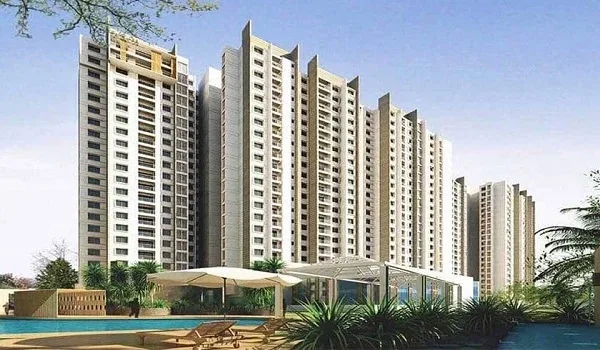
Apartment Cluster — 14 Acres, 4 Towers, 855 Units
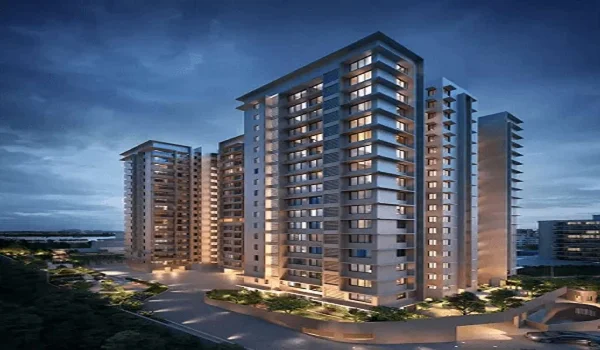
The apartment cluster is a compact 14-acre parcel within the wider 200-acre township. It has 855 residences distributed across four towers.
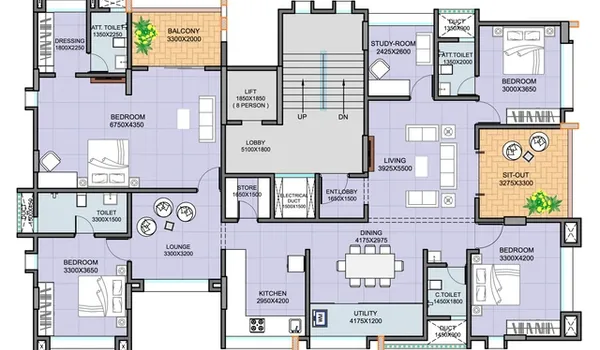
Each tower follows a 2 Basement + Stilt + 17 Floor structure. Across four towers, this creates 68 residential tower floors. The average works out to about 214 apartments per tower and 12 to 13 apartments per residential floor. The final number will vary by tower and floor because larger 3 and 3.5 BHK plans need more floor area than 2 and 2.5 BHK homes. Apartment configurations:
- 2 BHK – 1,330 sq. ft.
- 2.5 BHK – 1,598 sq. ft.
- 3 BHK – 1,896 sq. ft.
- 3.5 BHK – 2,250 sq. ft.
The apartment parcel has a gross density of about 61 homes per acre. This figure includes the tower land, internal roads, basement entry points, tower setbacks, landscaped areas and shared amenities within the 14-acre cluster.
What the Apartment Master Plan Must Show
The final tower plan should clearly mark the four tower positions, tower-to-tower distance, entry lobbies, lift cores, staircases, basement ramps and fire-engine access. It should also show which towers face the central landscape, villa side, internal road or future development parcels.
For buyers, the most important master plan details are not only the tower number and floor. Tower spacing affects privacy and daylight. Direction affects afternoon heat. Road position affects noise. Future-phase land can affect long-term views.
Villa Enclave — 50 Acres and 217 G+2 Villas
The villa parcel is the larger residential land use. It covers 50 acres and contains 217 G+2 villas.
The villa enclave has a gross density of about 4.34 homes per acre. The total land allocation works out to roughly 10,000 sq. ft. per villa before deducting internal roads, landscaping, visitor parking, common amenities and service infrastructure. This is not the individual villa plot size, but it shows the low-density character of the 50-acre enclave.
Villa configurations:
- 4 BHK – 4,200 sq. ft.
- 4.5 BHK – 5,200 sq. ft.
- 5 BHK – 6,800 sq. ft.
Each villa follows a Ground + 2 Floors format. The approved villa master plan should show the individual plot size, built-up area, front and side setbacks, private garden area, parking provision and the distance between facing villas.
How the Villa Plan Differs from the Apartment Plan
The villa enclave occupies 78.1% of the Phase 1 land but contains only 20.2% of its homes. In contrast, the apartment cluster contains 79.8% of the homes on 21.9% of the land. This land split is the main planning difference between the two residential zones.
The villa enclave therefore needs its own low-speed roads, visitor parking, pedestrian paths and controlled access. The final plan should also show whether villas have an exclusive amenity block or use the Grand Clubhouse with apartment residents.
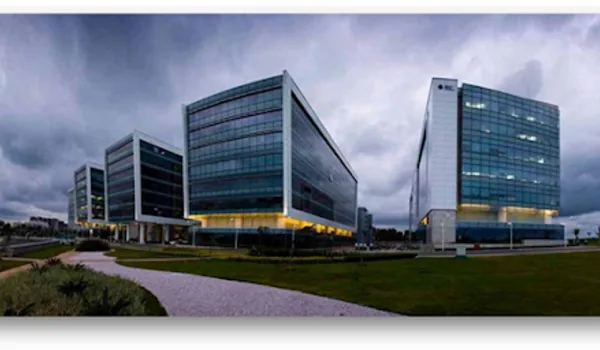
On-Site IT Tech Park in the Master Plan
The wider township includes an on-site IT tech park.
The IT tech park is a separate commercial land use within the mixed-use township. It should not be described as the same type of amenity as a clubhouse, swimming pool or sports court. Its role is to add office space, employment and weekday activity within the larger Embassy Knowledge Park development.
The approved master plan should show the tech park’s exact land parcel, building position, employee entrance, visitor entrance, parking, service access and distance from the apartment and villa zones. Commercial traffic should not move through residential roads. Separate access will be important for privacy and traffic control.
The tech park also gives the township a direct work-and-live advantage. Residents may have access to employment and business services within the same 200-acre development instead of depending only on offices located near Hebbal or Manyata Tech Park.
Open Space and Landscape Planning in masterplan of the Embassy Knowledge Tharahunise
Approximately 75% of the township is planned as open space and green zones.
If the 75% figure applies to the complete 200-acre township, it represents about 150 acres.
However, the approved master plan must show how this area is calculated. Open space can include landscaped parks, roads, setbacks, sports courts, water-management zones and land reserved for future phases. These are not all equal in daily use.
The plan should divide the open area into:
- Usable lawns and parks
- Walking and jogging paths
- Children's play areas
- Outdoor sports zones
- Landscape buffers
- Tower and villa setbacks
- Roadside planting
- Water-management areas
- Restricted utility zones
- Future-phase land
4,000-Tree Green Programme
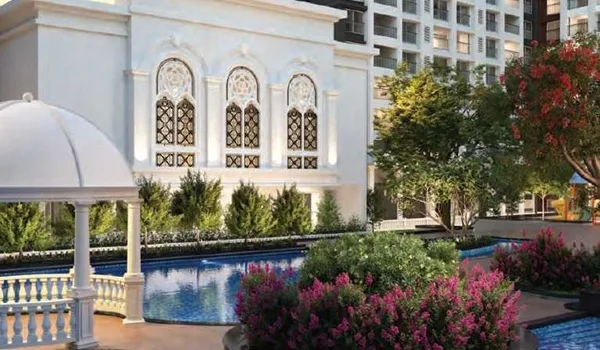
The landscape plan includes a programme of around 4,000 trees.
If all 4,000 trees are planted across the 64-acre Phase 1 land, the average works out to about 62 trees per acre. The actual experience will depend on where the trees are placed rather than only on the total count.
The landscape plan should show dense planting along internal roads, villa boundaries, apartment setbacks, walking paths and shared amenity areas. Trees near west-facing towers can reduce afternoon heat, while boundary planting can reduce road noise and improve privacy.
The official landscape schedule should also confirm the tree species, planting size, native- tree percentage and areas where existing mature trees will be retained.
Internal Roads and Vehicle Movement
Township-scale developments succeed or fail on circulation design.
The road plan must handle five different types of movement: apartment residents, villa residents, office employees, visitors and service vehicles. These users should not all depend on the same internal route.
Apartment vehicles will enter basement parking through dedicated ramps. The villa enclave requires lower-speed internal roads with private parking access. The IT park needs a separate commercial entry and parking system. Delivery vehicles, waste-collection vehicles and emergency services also need clear service routes.
The approved plan should provide exact data for:
- Main township road width
- Apartment-cluster road width
- Villa internal road width
- Commercial entry road
- Basement ramp locations
- Visitor drop-off areas
- Fire-tender turning radius
- Ambulance access
- Service and delivery movement
Pedestrian Movement
Pedestrian planning must connect the four apartment towers, villa enclave, clubhouse, outdoor amenities and commercial zone without forcing residents to cross heavy traffic routes.
The most important pedestrian links are the routes from each apartment tower to the clubhouse, from villa streets to shared amenities and from the residential zones to the IT park. These paths should have shade, lighting, wheelchair access and safe road-crossing points.
The final master plan should also show whether cycling routes are separated from walking paths and whether the apartment podium remains free from regular vehicle movement.
Grand Clubhouse and Amenity Distribution
The Grand Clubhouse serves as the central social and wellness space for residents. The project offers more than 40 sports, fitness and lifestyle amenities. The master plan should show whether the clubhouse is centrally placed for all four apartment towers or positioned closer to one part of the cluster. It should also show the walking distance from each tower and the villa enclave.
High-use indoor facilities can be placed inside the clubhouse. These may include the gym, indoor swimming pool, indoor games, event hall, coworking space and wellness rooms. Outdoor amenities such as courts, children’s play zones, senior seating areas and walking paths should be distributed across the residential parcels.
The approved amenity plan must confirm which facilities are shared across the township and which are restricted to apartment or villa residents.
Parking and Service Zones
The apartment towers have basement parking. The final plan should confirm the parking ratio, visitor parking, EV-charging spaces, lift access and whether each tower has an independent basement entry.
The villa enclave should show parking within each plot as well as common visitor spaces. The commercial zone must have separate office parking so that tech-park users do not enter residential parking areas.
Utility areas such as the sewage-treatment plant, water-treatment plant, transformers, generators and waste-processing zones should be placed away from homes. Their location matters because they can affect noise, smell, service traffic and nearby views.
Future Phases of the 200-Acre Township
The remaining 136 acres will be developed in later phases and are not part of the current 64- acre residential launch.
These later phases cover 68% of the total township land. Their placement can affect the views, traffic, construction movement and amenity use of Phase 1 residents.
The complete master plan should show which sides of the apartment and villa parcels touch future development. Buyers should also check whether later phases will use the same main gate, internal roads, clubhouse, water systems and commercial infrastructure.
Why the Embassy Knowledge Park Master Plan Is Different
The main difference is not only the 200-acre size. It is the sharp density contrast within Phase 1. The four apartment towers place 855 homes on 14 acres, while the villa enclave places 217 homes across 50 acres.
This means almost 80% of the Phase 1 homes sit on less than 22% of its land. The larger villa parcel keeps the low-rise zone less dense, while vertical apartment planning uses the smaller parcel more efficiently.
The on-site IT tech park adds a third land use to the township. The success of the plan will depend on how well the residential and commercial zones are connected for walking but separated for traffic, parking and security.
Master Plan Details Buyers Must Verify
- Confirm the 200-acre township boundary.
- Match the 64-acre Phase 1 boundary with the RERA plan.
- Verify the 14-acre apartment and 50-acre villa parcels.
- Confirm four towers and 855 apartments.
- Verify the 217-villa count and plot areas.
- Check tower spacing and direction.
- Check which homes face future phases.
- Verify the IT park location and separate entry.
- Check road widths and basement ramps.
- Confirm the 75% open-space calculation.
- Ask for the 4,000-tree landscape schedule.
- Verify clubhouse access for apartments and villas.
- Check commercial and residential traffic separation.
- Compare the marketing plan with the K-RERA master plan.
FAQs
1. What is the total area of the Embassy Knowledge Park Master Plan?
Embassy Knowledge Park covers 200 acres and is planned as a multi-phase mixed-use township.
2. How much land is included in Phase 1?
Phase 1 covers around 64 acres, or about 32% of the complete township.
3. How is the Phase 1 land divided?
The apartment cluster is planned to cover around 14 acres, while the villa enclave covers around 50 acres.
4. How many homes are included in Phase 1?
Phase 1 is planned for around 1,072 homes, including about 855 apartments and 217 villas.
5. What is the apartment density?
The 14-acre apartment cluster works out to around 61 apartments per acre, with four towers averaging around 214 apartments per tower.
6. What is the villa density?
The 50-acre villa enclave works out to around 4.34 villas per acre, with a gross land allocation of about 10,000 sq. ft. per villa before roads, landscaping and shared spaces are deducted.
7. How much land remains for later phases?
The remaining 136 acres, or about 68% of the township, is planned for development through later phases and wider mixed-use components.
8. Is the IT tech park a residential amenity?
No. The IT tech park is planned as a separate commercial component within the larger mixed-use township, with its entry, parking and service movement kept separate from residential traffic.
9. Does the project have 75% open space?
Working project data indicates around 75% open space. The approved master plan will confirm exactly what is included in this calculation.
10. What should buyers check before selecting an apartment?
Buyers should check tower direction, spacing, road exposure, basement entrance, clubhouse distance, future-phase land, and whether another tower could block the selected view.
11. What should villa buyers check?
Villa buyers should verify the plot area, setbacks, private garden, parking, road width, visitor access, and which amenities are exclusive to the villa enclave.
12. When will the final master plan be legally confirmed?
The registered K-RERA master plan and sanctioned drawings will be the legally binding sources once project registration is issued.
Explore Embassy Knowledge Park