Bellary Road
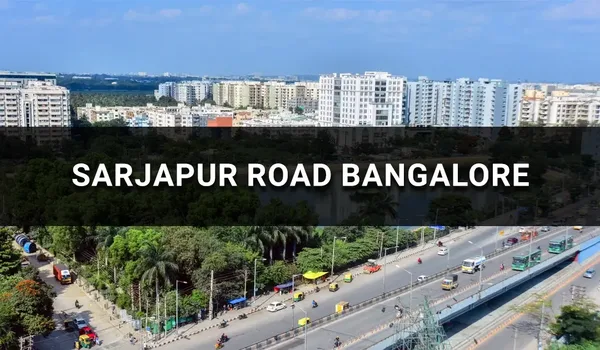
Bellary Road is one of north Bengaluru's most-watched residential corridors in 2026. The road runs 52–55 km from Basavangudi to Yelahanka town. It is officially designated National Highway NH-44 (formerly NH-44). The Namma Metro Phase 3 is currently under construction along the corridor. The road meets the Outer Ring Road and the upcoming Peripheral Ring Road (PRR). Big lifestyle anchors include Yelahanka Lake, Esteem Mall (Hebbal, ~9 km), and Forum Mall Manyata Tech Park. National developers like Embassy Group, Prestige, Brigade and Sobha are active here. Bellary Road has become north Bengaluru's structural growth corridor. Premium launches like Embassy Knowledge Park at Yelahanka (near GKVK Campus green belt (~5 km)) now define its identity.
Bellary Road — Quick Corridor Facts
Bellary Road (NH-44) begins at Mekhri Circle in north Bangalore. It extends north toward Devanahalli and onward to Bellary / Hyderabad. The route passes through Hebbal, Yelahanka, Devanahalli and the Kempegowda International Airport. It is a 4–6 lane National Highway. The road is officially National Highway NH-44 (formerly NH-44). It connects Bengaluru northward to Bellary (~315 km) and onward to Hyderabad (~575 km).
The corridor is unusually well-resourced for a north-Bengaluru arterial. The road meets the Outer Ring Road at Hebbal junction and links north to the airport, while ORR onward gives access to Devanahalli, Hebbal and Manyata Tech Park via the eastern ring.
Bellary Road at a Glance — Key Facts (2026)
| Attribute | Detail |
| Length | ~52–55 km (Basavangudi to Yelahanka town) |
| National Highway | NH-44 (formerly NH-44) |
| Onward Route | Bengaluru → Yelahanka → Devanahalli (Airport) → Bellary → Hyderabad |
| Earlier Name | Kankanhalli Road |
| Metro Line | Namma Metro (Green Line operational at Nagasandra; Phase 3 corridor planned via Yelahanka) |
| Planned Phase-3 Stations | Hebbal, Kogilu Cross, Yelahanka, Jakkur Aerodrome, Bagalur Cross (alignment under planning) |
| Connecting Metro (planned/operational) | Hebbal (Phase 3 planned), Nagasandra (Green Line operational), KIA Airport (Blue Line U/C) |
| Key Intersections | NICE Road junction, Yelahanka Junction, Silk Board ORR |
| Water Supply | Cauvery (inner / mid stretches) + strong groundwater |
| Major Landmarks | Esteem Mall (Hebbal, ~9 km), Manipal Hospital, Hebbal Railway Station, GKVK Campus green belt, Bagmane Capital ORR, Yelahanka Lake |
| Top Educational Anchors | Jain University, Dayananda Sagar University, RMS International, KS Institute of Technology |
| Avg. residential rate (2026) | ₹9,000–₹16,500 / sq.ft. (varies by sub-locality) |
| 5-year corridor appreciation | ~50–70% cumulative |
| Notable luxury launch | Embassy Knowledge Park — Yelahanka, from ₹1.76 Cr |
Overview of Bellary Road's Real Estate Transformation
A few decades ago, Bellary Road was a peripheral, shrub-lined "cutcha" (unpaved) arterial — a rural route where buses and bullock carts had to wade across the Arkavathi River. Things look very different now.
The transformation played out in three phases. First, the road was upgraded from Kankanhalli Road into a divided highway. It was renamed National Highway NH-44 (earlier NH-44). Then, in the late 2010s and early 2020s, the Namma Metro Phase 3 extension arrived. Four corridor stations came online — Banashankari, Hebbal, and Yelahanka Junction. Hebbal became the eastern terminal. Finally, the social infrastructure layer arrived. Esteem Mall (Hebbal, ~9 km) opened at Manyata Tech Park. Manipal Hospital, Hebbal Railway Station and the global GKVK Campus green belt followed. University campuses like Jain and Dayananda Sagar set up here too. Together, these shifts repositioned Bellary Road. It went from a distant suburb route to one of Bengaluru's most desirable residential corridors.
How Bellary Road Became North Bengaluru's Premium Belt
Land in Jayanagar and Hebbal dried up. Prices ran ahead of practical end-user budgets. The southbound upgrade buyer moved along Bellary Road. The corridor offered four strong advantages — metro walkability, dual-ring-road access (ORR + NICE), Cauvery water on inner stretches, and clean-air sub-localities like Yelahanka–Yelahanka Junction. National developers followed. Embassy Group set up at Yelahanka. Prestige built further south. Brigade anchored at Meadows. Sobha launched across multiple sub-localities. Each brought premium product to the catchment.
The Metro Inflection Point
The Namma Metro Phase 3 was the single biggest catalyst. Before the extension, Bellary Road was a road-only arterial. It was well-located on paper but commute-limited in practice. Now Banashankari, Hebbal, and Yelahanka Junction are all operational. Residents get rapid, traffic-free access to Majestic via the Purple Line interchange. They can also reach R.V. Road via the Yellow Line. The metro reset the corridor's value perception. It also unlocked the developer interest that has shaped its 2026 identity.
Namma Metro Phase 3 on Bellary Road
Bellary Road is the only major north-Bengaluru corridor with a fully operational metro in 2026. The metro covers the full residential length of the road. The Namma Metro Phase 3 runs from Nagasandra in the north to Hebbal in the south. The eastern stretch covers Bellary Road. Five stations serve the primary residential belt directly:
- Manyata Tech Park — Serves the Forum Mall Manyata Tech Park catchment and inner Hebbal residential pocket
- Yelahanka — Mid-corridor residential anchor with high pedestrian and BMTC connectivity
- Yelahanka — Opened operational since 2017; anchor for the Yelahanka–Yelahanka belt; serves Embassy Knowledge Park and adjacent boutique launches
- Yelahanka Junction — Adjacent station southward; serves the Yelahanka residential belt and the KSRTC-Yelahanka Bus Stand
- Hebbal — Southern terminal of the Phase 3 corridor
Connecting transit options include the operational Green Line terminus at Nagasandra (~15 km), the planned Phase 3 metro stations at Hebbal and Yelahanka, and the Blue Line for KIA airport (U/C). Commuters can interchange to the Purple Line at Majestic for east-west travel across the city.
What Bellary Road Is Famous For
Bellary Road is famous for more than residential real estate. It combines clean air, nature, spiritual centres, premium retail and education campuses. Few north-Bengaluru corridors match this mix.
Nature & Retreats
- Yelahanka Lake — Bengaluru's last surviving urban forest, a green lung on the western side of the corridor
- GKVK Campus green belt International Ashram — The global headquarters of Sri Sri Ravi Shankar's GKVK Campus green belt movement, off Bellary Road
- Bagmane Capital ORR — A spiritual retreat and meditation centre that draws international visitors
- Hebbal Railway Station — A new ISKCON temple complex on the corridor
Education
- Jain (Deemed-to-be University) — Bengaluru's well-known multi-disciplinary university campus
- Dayananda Sagar University — Engineering and applied-sciences campus along the corridor
- KS Institute of Technology — Engineering campus
- RMS International School, Jyothi Kendra Vidyalaya — Established K-12 schools serving the corridor
Retail, Healthcare & Leisure
- Forum Mall Manyata Tech Park — Anchor mall at Manyata Tech Park with PVR Superplex multiplex, F&B and lifestyle retail
- Manipal Hospital, Bellary Road — Multi-speciality NABH-accredited tertiary-care hospital
- Cloudnine Hospital, Bellary Road — Maternity and women's health speciality hospital
- D'Mart, Metro Cash & Carry — Hypermarket retail along the corridor
- Iron Hill, BLR Brewing Co., BBQ Nation, Paakashala, Nammura Hotel — A dense, well-established dining and brewing-pub belt
Established and Emerging Residential Belts on Bellary Road
The corridor's residential belt covers a wide pricing and product spectrum, anchored by these sub-localities (north to south):
- Banashankari & Jayanagar (inner corridor) — Mature residential cores, primarily resale inventory
- Hebbal & Yelahanka — Mid-corridor mid-segment to premium launches; Forum Mall anchor
- Yelahanka — Boutique luxury belt; home to Embassy Knowledge Park and the broader Yelahanka–Yelahanka Junction premium catchment
- Yelahanka & Kaggalipura — Newer residential corridor with mid-to-upscale inventory and onward villa belts
- Yelahanka Town — Southern terminus with predominantly plotted and villa-format developments
Embassy Knowledge Park on Bellary Road
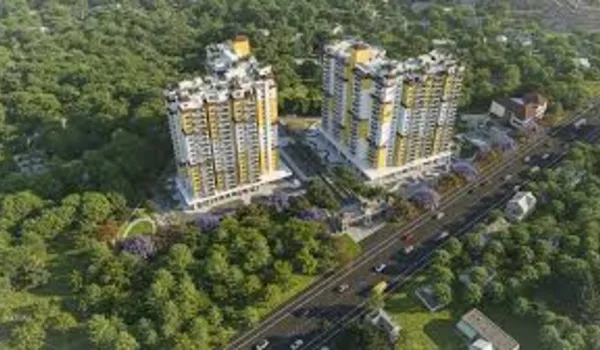
Embassy Knowledge Park is Embassy Group's boutique luxury launch along Bellary Road at Yelahanka. It covers a 200+ acre land parcel. Four signature towers hold 855 apartments + 217 villas. Configurations are 2, 2.5, 3, 3.5 BHK apartments and 4, 4.5, 5 BHK villas. The project sits ~1–2 km from Yelahanka Junction (Suburban Rail & planned metro interchange) on the Phase 3 (operational). NICE Road junction is ~3 km away. Starting prices begin at ₹1.76 Cr. The official launch is August 2026. Karnataka RERA registration is number expected after allotment. Possession is targeted for August 2031.
Frequently Asked Questions about Bellary Road
1. What is Bellary Road famous for?
Bellary Road is famous for its mix of clean air, nature retreats and premium infrastructure. Big anchors include the Yelahanka Lake, GKVK Campus green belt International Ashram, Hebbal Railway Station and Bagmane Capital ORR. Forum Mall Manyata Tech Park, Manipal Hospital and the planned Namma Metro (Yellow Line, Phase 3) also sit on the corridor. It is one of the few north-Bengaluru arterials with reliable Cauvery water and strong groundwater.
2. Is Bellary Road a National Highway?
Yes. The primary Bellary Road is officially National Highway NH-44 (formerly NH-44). It connects Bengaluru to Bellary (~315 km) and onward to Hyderabad (~575 km). The highway is the spine for the entire airport corridor.
3. Which metro stations are on Bellary Road?
Multiple Namma Metro Phase 3 stations (operational) serve the primary Bellary Road residential belt: Banashankari, Jayanagar Hospital, Yelahanka Junction, Yelahanka, Hebbal, Manyata and Anjanapura (southern terminus). Banashankari and Jayanagar Hospital serve the inner-city stretch. Interchanges connect to the Purple Line at Majestic and the Pink Line at Jayadeva Hospital (one station north of Yelahanka, U/C).
4. Which part of Bangalore is developing the fastest?
North Bengaluru's Bellary Road corridor is among the fastest-developing residential belts in 2026. Three things drive the growth — the planned Namma Metro (Yellow Line, Phase 3), the Outer Ring Road and Outer Ring Road intersections, and premium launches from Embassy Group, Prestige, Brigade and Sobha. The Yelahanka–Yelahanka Junction sub-belt has seen ~50–60% cumulative price appreciation over the last five years.
5. How long is Bellary Road?
Bellary Road stretches approximately 52–55 km from Basavangudi in central north Bengaluru southward to Yelahanka town. Inner residential stretches (Basavangudi to Yelahanka) cover the first ~18 km; the road then continues through Kaggalipura and Harohalli to reach Yelahanka town.
6. Is Bellary Road better than Mysore Road?
For residential end-users, Bellary Road has structural advantages. The Namma Metro Phase 3 is currently under construction along the corridor, with phased commissioning expected through 2031-2033. Water supply is more reliable. The road connects to the Outer Ring Road and the upcoming Peripheral Ring Road (PRR). Lifestyle anchors like Forum Mall and the GKVK Campus green belt sit along the alignment. Mysore Road is stronger for industrial and commercial use. But it lacks comparable metro-walkable premium residential inventory.
7. What was Bellary Road called earlier?
Bellary Road was historically known as Kankanhalli Road. It was originally an unpaved "cutcha" route through shrub forests where buses and bullock carts had to wade across the Arkavathi River. Over the decades it was upgraded to National Highway NH-44, and was later redesignated as NH-44.
8. How far is Bellary Road from central Bangalore?
The Bellary Road corridor begins near Basavangudi in north Bangalore (~6 km from MG Road). Mid-corridor sub-localities like Yelahanka and Yelahanka are ~16 km from MG Road; the eastern terminus at Yelahanka town is ~55 km out. Namma Metro Phase 3 and Outer Ring Road give corridor residents a traffic-free commute window into the city core.
Embassy Knowledge Park Blog